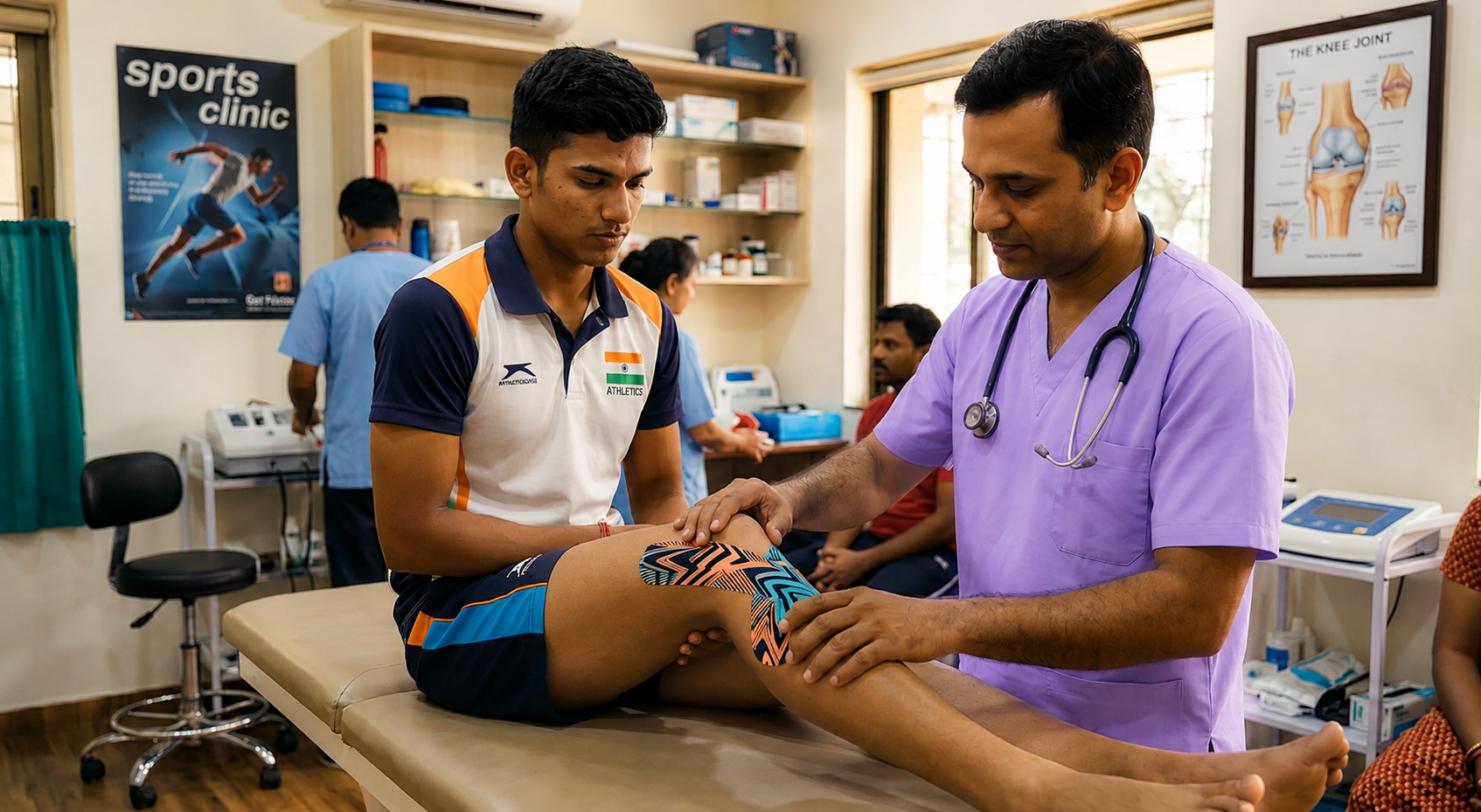
A complete guide to understanding, treating, and preventing sports injuries — from the RICE method to long-term rehabilitation.
August 28, 2025•7 min read•Dr. Imran Khan
Sports and physical activities are a great way to stay healthy, but they also come with risks.
Whether you're a professional athlete, a weekend runner, or someone who enjoys casual games,
injuries are an unavoidable part of the journey.
A twisted ankle, a strained muscle, or even a torn ligament can not only stop your performance
but also affect your daily life. The good news? With the right sports injury management strategies,
most injuries can be treated effectively and prevented in the future.
In this guide, we'll cover: the most common types of injuries,
immediate first aid steps, when to seek medical help, and long-term recovery techniques.
1. Why Do Sports Injuries Happen?
Sports injuries usually occur due to:
Sudden Trauma: Accidents like falls, collisions, or awkward landings.
Overuse: Repeated movements without enough rest.
Poor Technique: Incorrect posture or lack of warm-up.
Improper Equipment: Worn-out shoes or lack of protective gear.
Common Sports Injuries:
Sprains (ligament injuries)
Strains (muscle or tendon injuries)
Knee injuries (ACL tear, meniscus)
Shoulder injuries (rotator cuff)
Stress fractures (tiny bone cracks)
Tendonitis (inflammation of tendons)
Understanding the cause and type of injury is the first step towards effective treatment.
2. Immediate Response: The R.I.C.E. Method
When an injury happens, the first 24–48 hours are crucial. The widely recommended R.I.C.E. method helps control pain and swelling:
R
Rest
Stop activity immediately. Avoid stress on injured area.
I
Ice
Apply ice pack for 15-20 min every 2-3 hours.
C
Compression
Wrap with elastic bandage for support.
E
Elevation
Keep injured area above heart level.
This method works for most mild-to-moderate injuries and is often the first step before professional consultation.
3. When Should You See a Doctor?
Not all sports injuries can be treated at home. You should consult a sports medicine specialist if you experience:
Severe swelling or bruising
Inability to move joint or bear weight
Visible deformity
Persistent or worsening pain
Numbness or weakness
Delaying medical attention can turn a minor injury into a long-term problem. Early diagnosis ensures faster recovery.
4. Recovery & Rehabilitation
Healing from a sports injury is not just about resting—it's about active recovery. A structured rehabilitation plan ensures that you return to sports safely.
Steps in Recovery:
1
Physiotherapy: Targeted exercises to restore flexibility, strength, and balance.
2
Gradual Return to Activity: Start with light training and increase intensity step by step.
3
Strength Training: Focus on the injured area to prevent re-injury.
Proper Nutrition for Recovery:
🥩
Protein
Repairs muscles
🦴
Calcium & Vitamin D
Strengthens bones
💧
Hydration
Maintains joint lubrication
Mental Wellness: Injuries can affect confidence. Meditation, breathing exercises, and patience play a big role in recovery.
5. Prevention: The Smart Approach
"Prevention is better than cure" applies perfectly to sports injuries. While you cannot avoid accidents completely, you can reduce the risk with the right precautions.
Injury Prevention Tips:
Always warm-up before sports and cool down afterward
Wear proper footwear and protective gear
Avoid overtraining—allow your body time to rest
Maintain good posture and technique during practice
Listen to your body—don't ignore pain signals
Athletes who follow structured training plans with adequate rest and conditioning are less likely to suffer injuries.
6. Role of Sports Medicine & Technology
Modern sports injury management has advanced with technology:
MRI & X-rays for accurate diagnosis
Arthroscopy – minimally invasive surgery
PRP therapy for faster healing
Wearable devices tracking movement
These innovations help athletes recover faster and return to peak performance.
Conclusion
Sports injuries are common, but they don't have to end your game. With timely care, proper medical support, structured rehabilitation, and preventive strategies, most athletes can return to their sport stronger than before.
Remember:
Don't ignore pain
Start treatment early
Follow a recovery plan
Focus on prevention
By adopting smart sports injury management practices, you can enjoy your favorite games without long breaks or permanent damage.
IK
Dr. Imran Khan
Sports Medicine Doctor | Pain Management Specialist | Spine & Back Pain Treatment