DK Physio
Non-Surgical • Natural Healing

Regenerative Therapy (PRP)

Platelet-Rich Plasma Treatment

Uses concentrated growth factors from your own blood to repair damaged tendons, ligaments, muscles, and joints. Unlike painkillers that mask symptoms, PRP triggers true tissue regeneration.

What is PRP Therapy?

Understanding Platelet-Rich Plasma

Harnessing your body's natural healing power

How Does PRP Work?

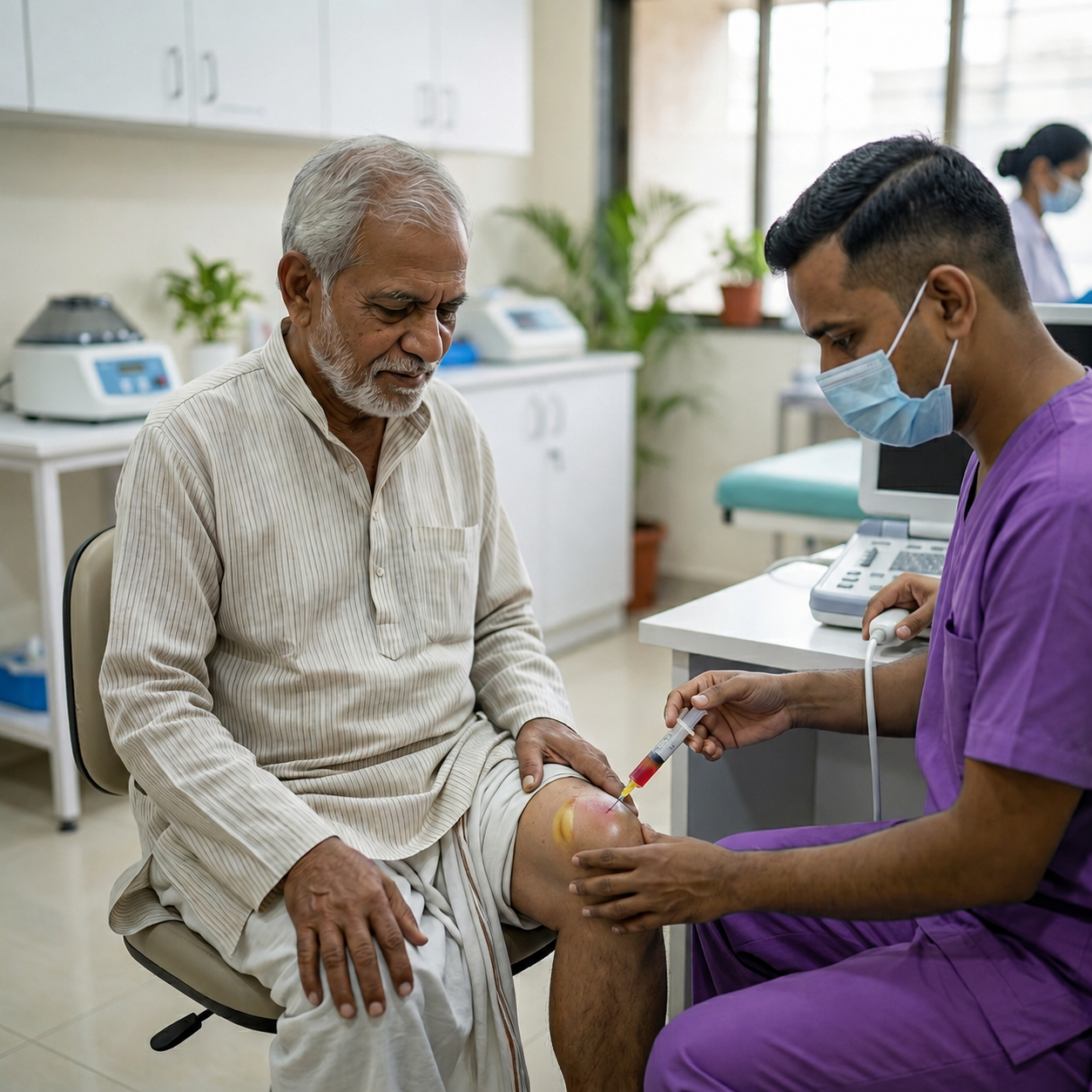
PRP therapy uses concentrated platelets from your own blood to accelerate healing in injured tendons, ligaments, muscles, and joints. Your blood is drawn, processed in a centrifuge to concentrate platelets 5-10x normal levels, and then injected directly into the damaged area.

These concentrated platelets release 30+ growth factors that signal your body to repair damaged tissue, reduce inflammation, and promote natural healing — without surgery or medication.
No allergic reaction (your own blood)
No surgery or incisions
Minimal downtime (return to activities in 1-2 days)
PRP Therapy - Platelet Rich Plasma Treatment
The Science

How PRP Works

A simple 3-step process using your body's natural healing ability

1

Blood Draw

15-30 ml of blood drawn from your arm - similar to a routine lab test

2

Centrifugation

Spins blood to concentrate platelets up to 10x normal levels

3

Injection

30+ growth factors injected into damaged tissue → triggers natural healing

✓ No allergic reaction (your own blood) ✓ No surgery ✓ Minimal downtime

Evidence-Based Applications

Conditions That Respond Best to PRP

Backed by clinical studies and proven results

Tennis / Golfer's Elbow

Chronic elbow pain not healing with rest or physiotherapy. High success rate with 1-2 injections.

Rotator Cuff Tears

Partial thickness shoulder tendon tears — PRP can often avoid or delay surgery significantly.

Knee Osteoarthritis

Early to moderate arthritis (Grade 1-3) — delays or prevents knee replacement surgery.

Plantar Fasciitis

Chronic heel pain unresponsive to stretching, orthotics, or shockwave therapy.

Jumper's Knee

Patellar tendonitis common in basketball, volleyball, and jumping athletes.

Achilles Tendonitis

Stubborn lower calf/heel pain that persists despite eccentric exercises.

Step by Step Guide

The PRP Procedure

Simple, outpatient, and completed in under 90 minutes

1

Consultation

30 minutes

2

Blood Draw

5 minutes

3

Centrifuge

15 minutes

4

Injection

10 minutes

5

Recovery

24-48 hrs

✓ Total procedure time: 60-75 minutes ✓ Same day discharge ✓ No hospitalization

0+
Years Experience
0+
Happy Patients
0+
Clinic Locations
0%
Success Rate
Why PRP Stands Apart

PRP vs. Traditional Treatments

Understanding the difference makes all the difference

1

Treats Root Cause

Steroids and painkillers mask pain temporarily. PRP uses your own growth factors to biologically repair torn tissues.

2

Minimally Invasive

No surgery, no scars, no general anesthesia. A simple injection that takes less than 90 minutes total.

3

Ultrasound-Guided

Precision injection into exact damaged tissue using live ultrasound guidance for maximum accuracy and results.

Ready to Heal Naturally?

Book your PRP consultation today and get expert regenerative therapy from Dr. Imran Khan

Frequently Asked Questions

Everything You Need to Know About PRP

Get answers to the most common questions about PRP therapy

Is PRP painful?

Most patients feel a brief pinch from the local anesthetic. The PRP injection itself feels like pressure. Mild soreness for 48 hours post-procedure is normal and indicates healing has started.

How many PRP injections will I need?

It depends on the severity. Mild tendonitis often resolves with 1 injection. Moderate arthritis or chronic tears may require a series of 2-3 injections spaced 4-6 weeks apart.

When will I see results?

Don't expect instant relief. The healing process takes time. Most patients notice significant improvement in pain and function by 4-6 weeks, with continued improvement up to 6 months.

What medications should I avoid before PRP?

Avoid NSAIDs (Advil, Motrin, Ibuprofen, Aspirin, Naproxen) and corticosteroids for 2 weeks before and 6 weeks after your injection, as they interfere with platelet function and reduce PRP effectiveness.

Is PRP covered by insurance in India?

Most Indian health insurance plans do not cover PRP as it is considered "investigational" by some insurers. We provide full cost transparency before your procedure.

Who is NOT a candidate for PRP?

Patients with active infection, blood disorders (thrombocytopenia), active cancer, or those on blood thinners (unless cleared by physician). Full thickness tendon ruptures requiring surgery are also not candidates.